FROM FRUSTRATION TO FULFILMENT: ELECTROCHEM REAFFIRMS COMMITMENT TO MIIF, PROMISES DIVIDEND FLOW ONCE PRODUCTION PEAKS
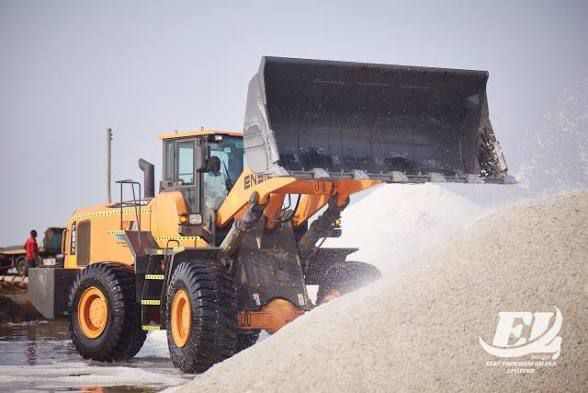
There is a quiet injustice that often shadows indigenous enterprise: when it struggles, it is doubted; when it succeeds, it is taken for granted. The story of Electrochem at the Songhor Lagoon is one such paradox—an ambitious Ghanaian industrial effort that has endured years of turbulence, yet stands today on the brink of delivering transformative value.
Beneath the noise of criticism and delay lies a deeper truth: Electrochem’s journey has not been one of failure, but of interruption. And now, emerging from a prolonged period of operational frustration, signals a renewed readiness, not only to produce at scale, but to honour its financial commitments to the (MIIF).
At its core, Electrochem’s intervention in Ada represents a bold industrial gamble. For over five decades, successive governments failed to unlock the economic potential of the Songhor Lagoon. What was once an underutilised natural resource has, through significant private capital and technical investment, been repositioned as a strategic national asset.
This transformation did not come without risk. Over $88 million was committed to infrastructure, community integration, and production systems—long before any meaningful returns could be guaranteed.
Yet, the pathway to industrialisation has been far from smooth. The company has had to navigate local resistance, legacy disputes over resource control, regulatory complexities, and periods of enforced inactivity. These are not trivial obstacles; they are structural challenges that would test even the most resilient multinational corporations. For an indigenous firm, they represent a compounded burden—financially, operationally, and reputationally.
Despite these setbacks, Electrochem has consistently demonstrated a long-term orientation. Its out-grower schemes, community salt pans, and employment initiatives reflect a deliberate strategy to align industrial growth with local inclusion. This is critical, not only for social licence to operate, but for sustainable production. The company’s approach suggests that profitability is not being pursued in isolation, but as part of a broader ecosystem of shared value.
It is within this context that its partnership with MIIF must be evaluated. MIIF’s mandate is not merely to extract short-term financial returns, but to catalyse long-term value in Ghana’s mineral and resource sectors. Electrochem fits squarely within this vision. The temporary delay in dividend flows should therefore not be misinterpreted as a breach of promise, but as a function of the gestation period inherent in large-scale industrial projects.
Crucially, the fundamentals remain intact. Production capacity has been established, market demand for industrial salt continues to grow, and expansion targets remain within reach. What is required now is operational stability—an environment in which Electrochem can move from intermittent activity to sustained output.
Once this transition is secured, the financial logic is straightforward: increased production will drive revenue, and revenue will translate into dividends for stakeholders, including MIIF.
The broader implications of this partnership extend beyond balance sheets. Electrochem’s success has the potential to anchor a new industrial corridor, stimulate export earnings, and position Ghana as a regional leader in salt production. Conversely, failure to support the project at this critical stage risks undermining investor confidence in indigenous enterprise and weakening the credibility of public-private partnerships.
The call, therefore, is not for indulgence, but for strategic patience and institutional alignment. Government and MIIF must recognise that the value of their investment is best realised not through pressure at a moment of recovery, but through support that enables full operationalisation.
As Electrochem transitions from frustration to fulfilment, the opportunity before Ghana is clear. This is a chance to demonstrate that when local enterprise dares to dream at scale, the state does not retreat in moments of difficulty but stands firm as a partner in progress. The dividends will come—of that there is little doubt. The only question is whether we will create the conditions for them to arrive sooner, stronger, and more sustainably.